Data Architecture
Building AI-ready data architectures
How to prepare business data, workflows, and reporting layers for intelligent automation.
Most AI initiatives stall because the underlying data is fragmented, inconsistently modelled, or trapped in tools that were never designed to support automation. Before adding models or agents, teams need a practical data architecture that connects operational signals, defines ownership, and makes reporting repeatable.
Start from operational signals, not data lakes
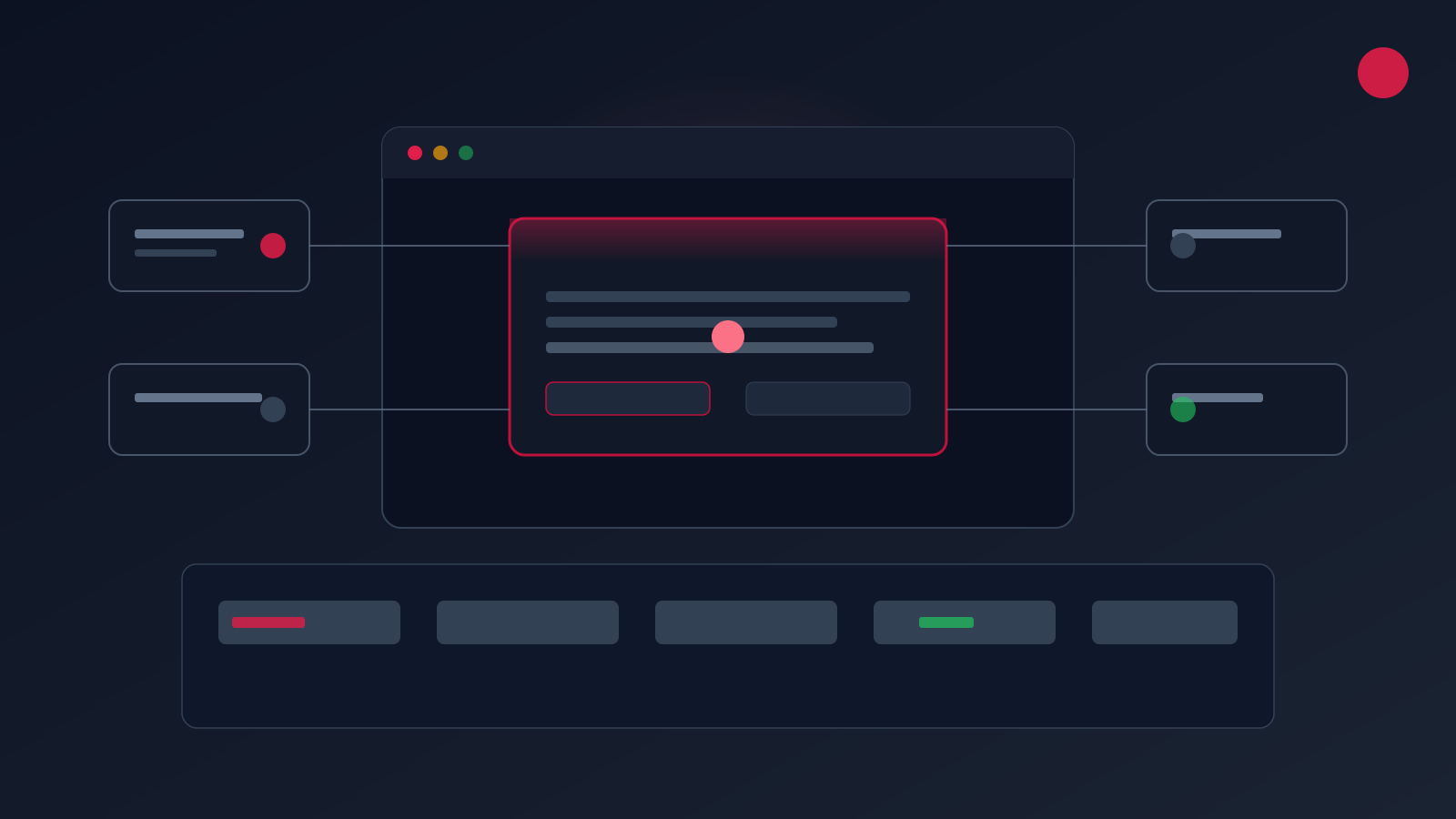
AI-ready architecture begins with the signals your business already depends on: customer activity, revenue events, bookings, inventory movement, campaign responses, and workflow stages. Map where each signal lives today, who owns it, and how often it changes.
The goal is not a perfect warehouse on day one. It is a connected layer that groups signals by workflow, business impact, and decision owner — so dashboards, automation, and future AI-assisted workflows have a stable foundation.
Design for reporting, automation, and governance together
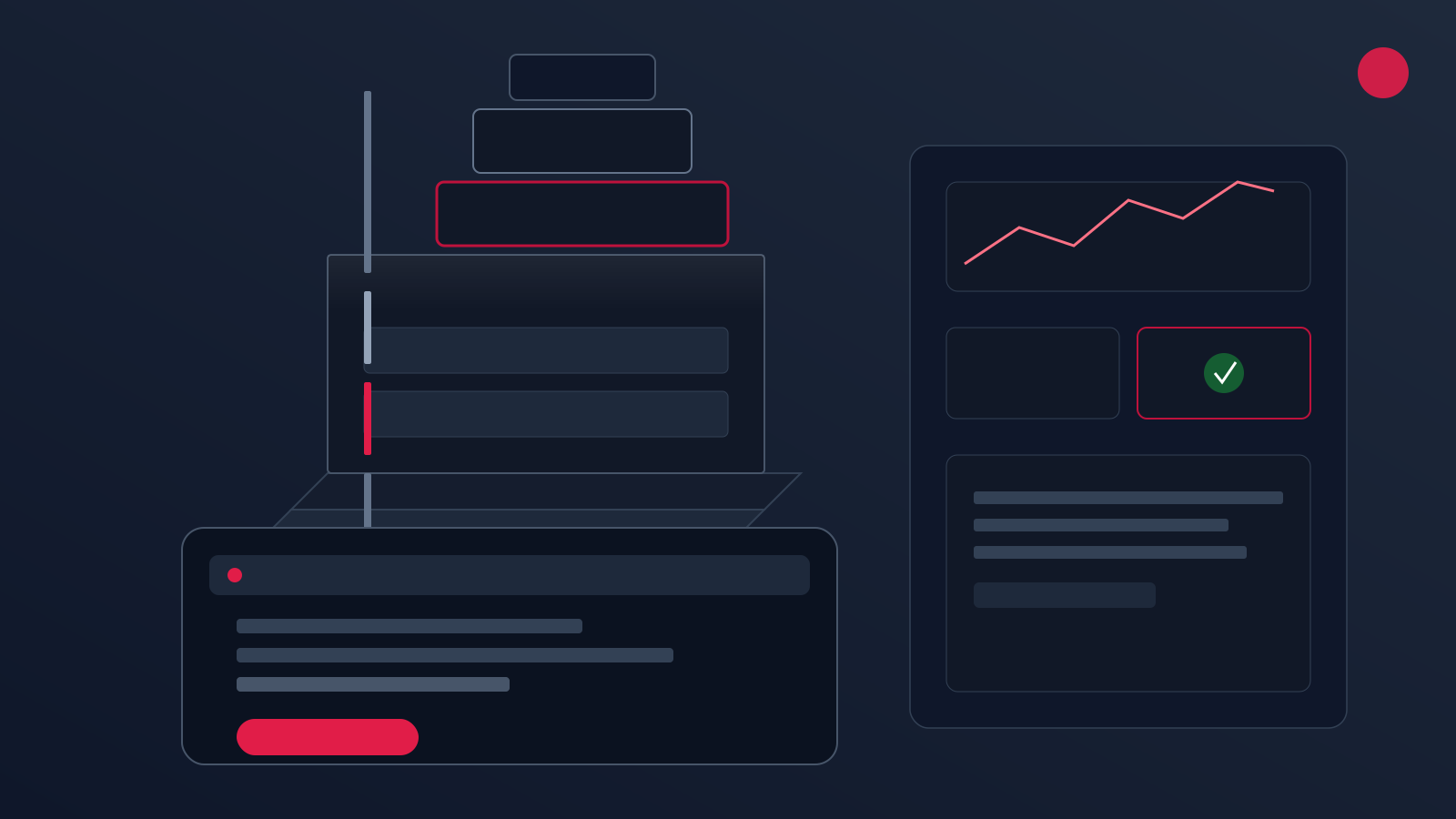
Separate raw ingestion from business-ready views. Define role-based access early, document transformation rules, and keep audit trails for anything that influences customer-facing or financial decisions.
Microcorem typically shapes this as a phased build: connect priority sources, model one decision workflow, then extend as value is proven — rather than attempting a full enterprise refactor before anything ships.
Build Your First Reliable AI Agent System
Move beyond AI experiments. Microcorem helps organisations design agentic workflows, retrieval systems, evaluation pipelines, and production-ready LLM applications.