Integration
Connecting CRM, ERP, and operational workflows
How integration layers help teams reduce manual work and improve decision visibility.
CRM, ERP, finance, and operations tools rarely share the same view of reality. Teams compensate with exports, spreadsheets, and manual reconciliation — which slows reporting and hides risk until it becomes urgent.
Why point-to-point integrations fail at scale
One-off integrations between two systems often work for a pilot, but they multiply quickly. Each new connection duplicates mapping logic, error handling, and security review. When a field changes in one system, several brittle scripts break silently.
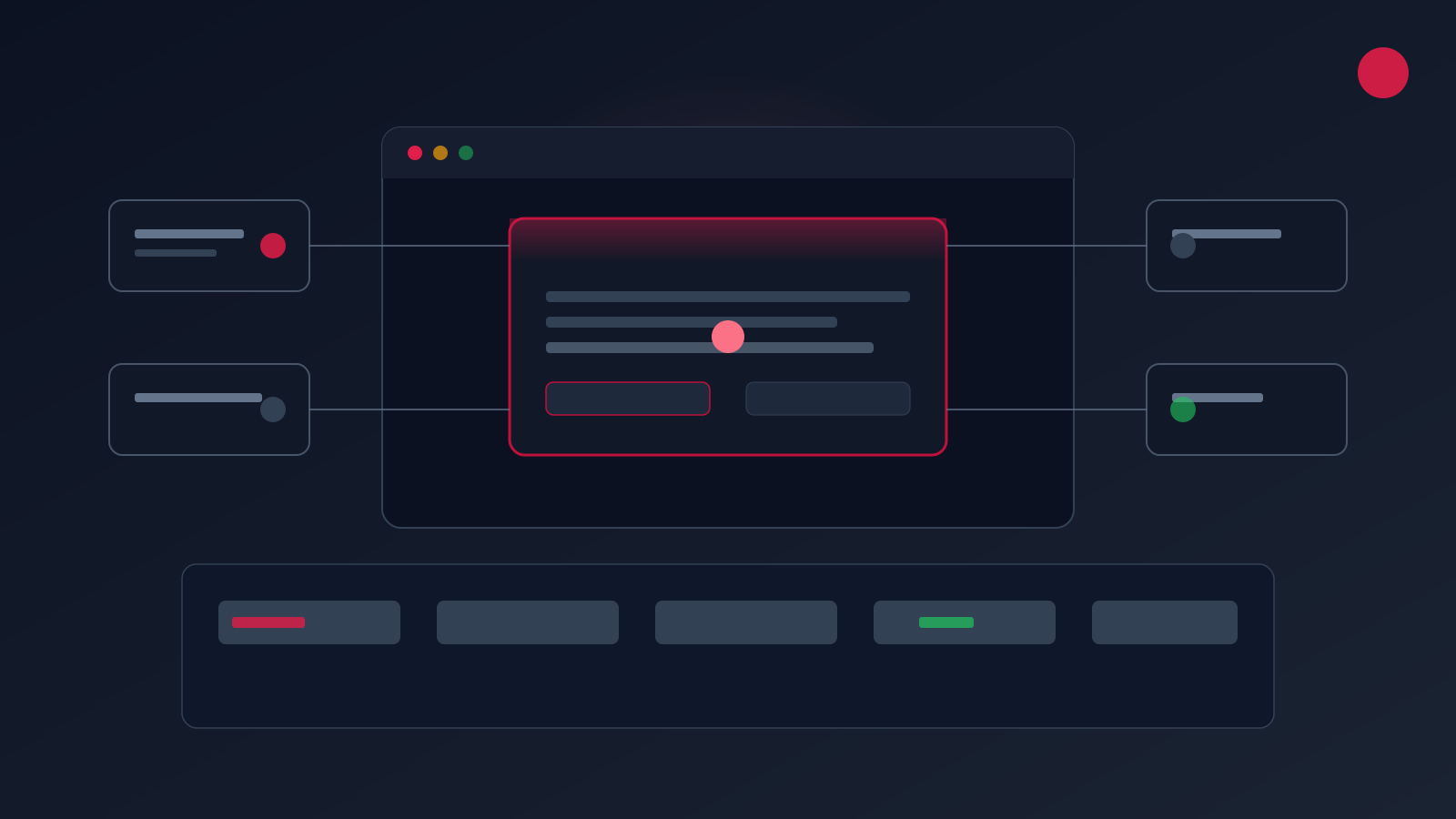
A practical integration layer treats connections as shared infrastructure: normalised events, clear schemas, retry behaviour, and visibility when sync fails — so operators know what is stale before they make decisions on bad data.
What to connect first
Prioritise workflows where manual reconciliation costs the most: order-to-cash, lead-to-opportunity, inventory-to-fulfilment, or booking-to-billing. Connect the minimum sources needed for one clearer operational view, then extend.
DecisionView™ by Microcorem is often shaped around these integration paths — turning fragmented CRM, ERP, and workflow signals into one connected decision layer for reporting and action.
Build Your First Reliable AI Agent System
Move beyond AI experiments. Microcorem helps organisations design agentic workflows, retrieval systems, evaluation pipelines, and production-ready LLM applications.