ML Operations (MLOps)
Monitoring concept drift at scale
Even the best-trained model can fall behind when the world changes. Monitoring concept drift is essential to protect accuracy, trust, and compliance—especially at scale. Here's how forward-looking teams tackle it in 2025 and beyond.
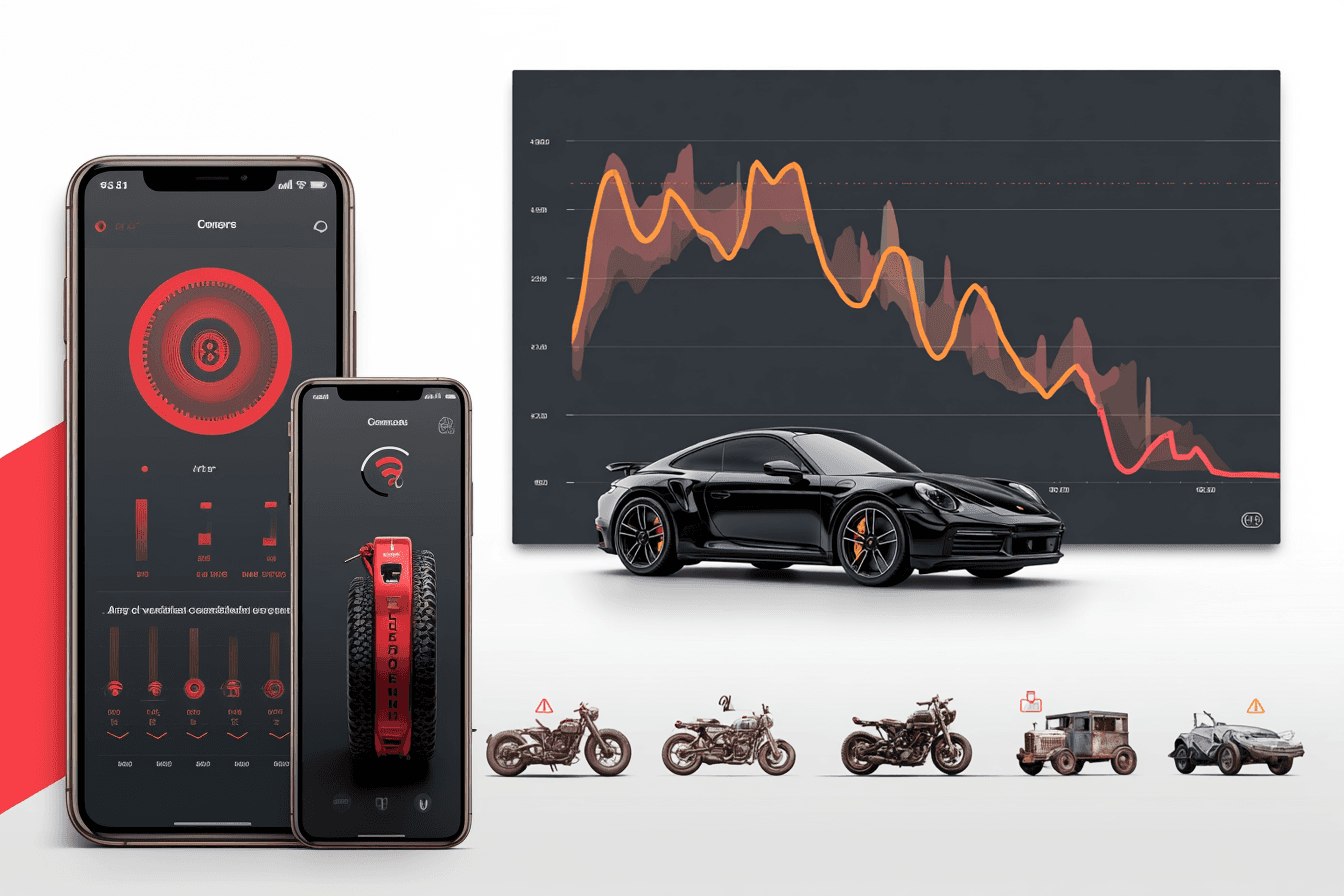
From Training to Truth: Staying Ahead of Concept Drift
What Is Concept Drift—and Why It Happens More Than You Think
Concept drift refers to changes in the statistical properties of the target variable your model is predicting. In plain terms: the world changes, and your model doesn't know it. It’s especially common in real-world deployments—like fraud detection, pricing engines, customer churn prediction, or even steering angle predictions in smart vehicles.
In automotive, road and traffic conditions evolve with weather and infrastructure. In healthcare, patient demographics and treatment protocols shift. In finance, fraud patterns mutate constantly. The input data may still “look fine” but the meaning has changed.
The Real-World Risks of Ignoring Drift
Letting drift go undetected can lead to:
- Faulty insurance pricing for new risk profiles
- Overheating parts in EVs due to unrecognized usage shifts
- Missed cancer diagnoses due to evolving biomarker patterns
- Regulatory breaches in finance and healthcare due to poor explainability
Ignoring drift isn’t just a tech issue—it’s a business liability.
What Scalable Drift Monitoring Looks Like
In 2025, the best-performing AI teams treat drift monitoring as a first-class citizen. They:
- Track feature distribution changes with tools like Evidently or Fiddler
- Monitor live inference vs ground-truth gaps
- Set alerts on prediction confidence decay
- Use continual learning systems or shadow deployments to compare old vs retrained models
Instead of “model performance suddenly dipped,” they get early signals like “user age distribution shifted” or “sensor calibration drifted,” giving them time to retrain or roll back intelligently.
UK & Canada: Why It Matters Even More
With growing regulation under the UK Automated Vehicles Act and Canada’s AI and Data Act, model transparency and post-deployment accountability are becoming legal requirements. Real-time monitoring of drift isn't just an engineering best practice—it's a compliance strategy.
How Microcorem Approaches Drift at Scale
At Microcorem, we integrate drift detection into every MLOps pipeline. For an auto client in the UK, we built a feedback loop where model inputs are auto-compared with actual track test outcomes. For a Canadian healthcare partner, we used batch + online drift detection to flag demographic shifts before accuracy could degrade.
Our stack includes:
- Evidently for real-time alerts
- Arize AI for inference monitoring
- Custom Grafana dashboards built on Prometheus metrics
- Drift-aware retraining triggers through GitOps pipelines
We don’t wait for performance decay—we design for early detection.
Further Reading & Web Resources
- Evidently AI – Drift Detection Open Source Tool
- Arize AI Monitoring Platform
- Fiddler AI – Model Monitoring & Explainability
- Why Concept Drift Is the Hidden Risk in MLOps – Towards Data Science
- UK Automated Vehicles Act Summary (HFW)
- Overview of Canada’s Artificial Intelligence and Data Act (AIDA)
Build Your First Reliable AI Agent System
Move beyond AI experiments. Microcorem helps organisations design agentic workflows, retrieval systems, evaluation pipelines, and production-ready LLM applications.