Small Models & Edge AI
Why Small Language Models May Matter More Than Frontier Models for Businesses
For many business workflows, smaller models may offer better cost control, privacy, latency, deployment flexibility, and domain-specific performance than frontier-only strategies.
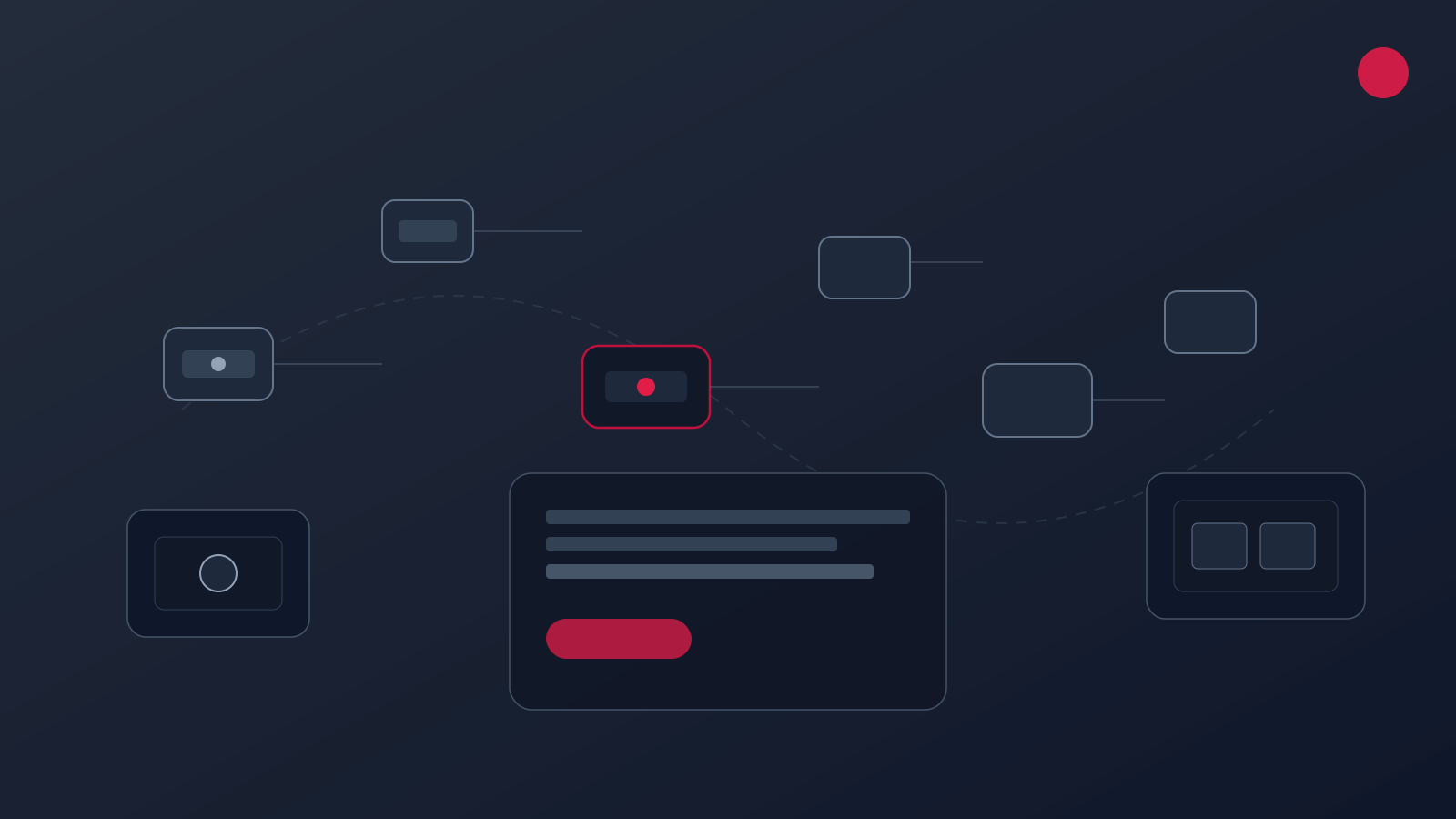
Frontier models are powerful defaults for exploration, but many operational workflows need predictable cost, low latency, and data residency — requirements that favour smaller, deployable models.
When smaller models win
Fine-tuned or instruction-tuned small models can outperform general models on narrow tasks: classification, extraction, templated drafting, and routing — when training data reflects real inputs.
Hybrid architectures are common: a small model for routing and structured steps, a larger model for complex reasoning on demand, with evaluation guiding where each is used.
Deployment discipline
Business value often comes from deployment discipline — where the model runs, how it is monitored, and how often it is retrained — not from using the largest available checkpoint.
Build Your First Reliable AI Agent System
Move beyond AI experiments. Microcorem helps organisations design agentic workflows, retrieval systems, evaluation pipelines, and production-ready LLM applications.